
Webster Garage Door Guide
What Webster's Older Doors Are Up Against
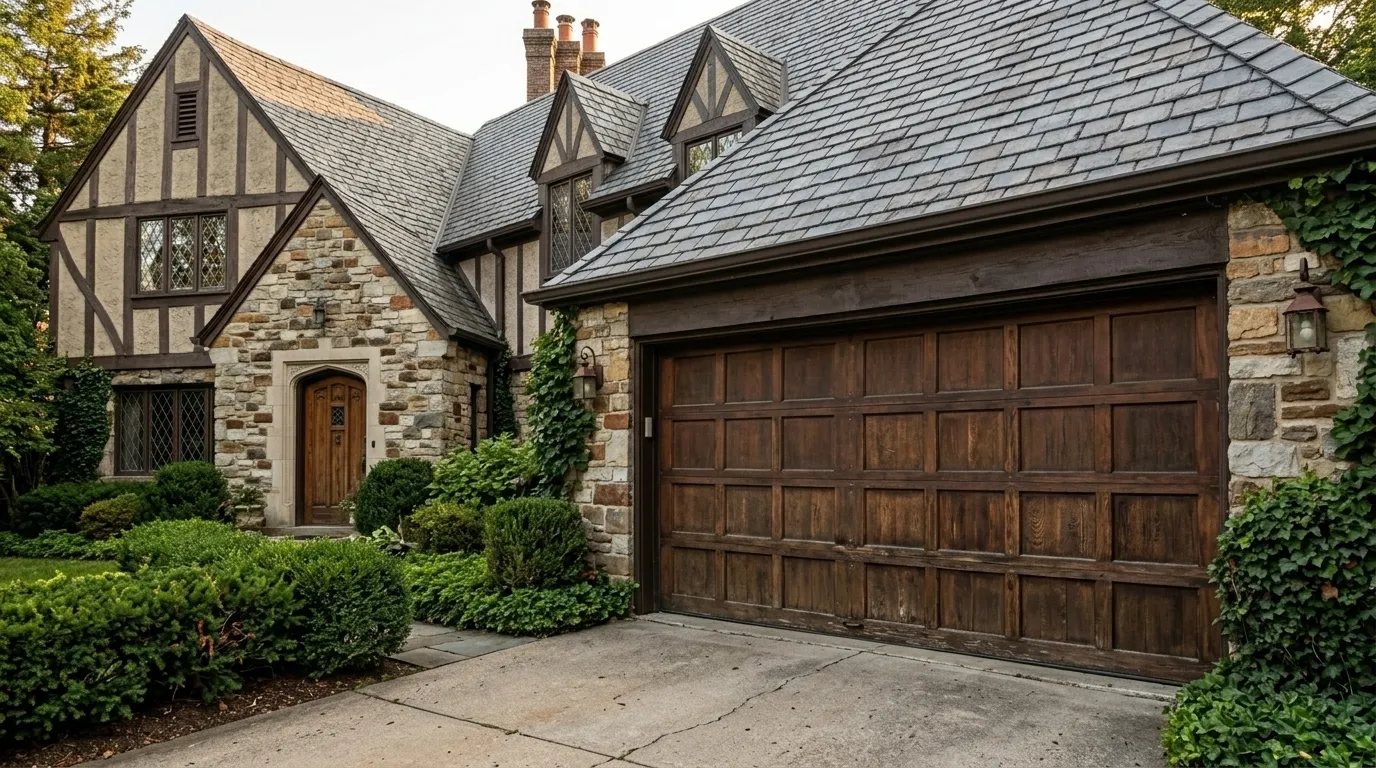
Webster homes built 1956-2014 often lack insulated doors. See how mild, humid Gulf air and older hardware wear on tracks, springs, and panels near Clear Lake.
- Licensed & Insured
- Same-Area Service Calls
- Upfront Pricing
What the Weather Here Does to It
Webster sits in a mild climate band with occasional freeze risk, not the hard freeze-thaw cycles that crack concrete up north. That sounds easy on a garage door, and mostly it is - you're not fighting ice buildup on the track every winter. What you are fighting is humidity that barely lets up.
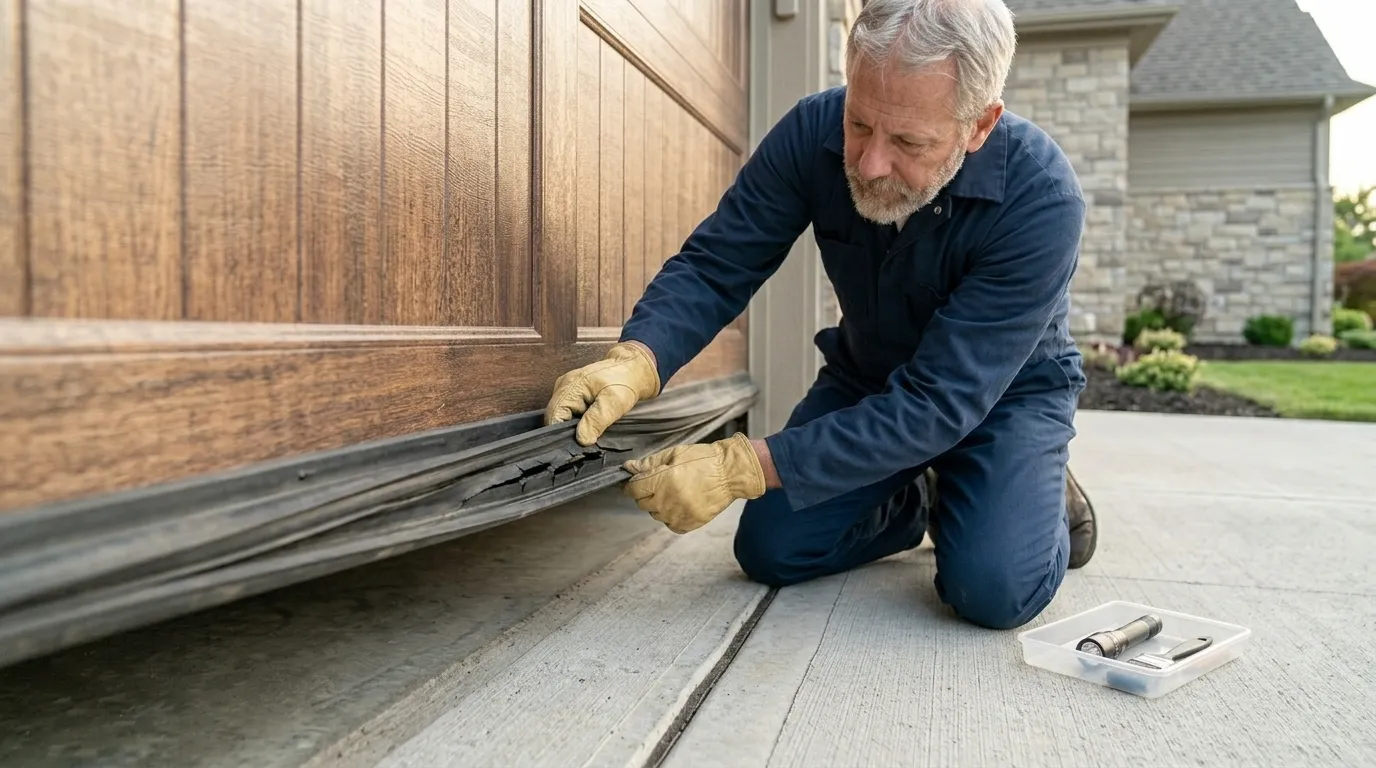
Being close to the water (Clear Lake is 3 miles north, South Shore Harbour 4 miles east), the air here carries more moisture most of the year than a door built in the 1970s or 80s was ever designed to shed. That moisture works into steel panels at the seams, into spring coils that aren't sealed, and into track bolts that back out slowly instead of snapping. On a lot of the doors we see, the rust isn't dramatic - it's a fine orange bloom along the bottom panel and around the roller brackets, the kind that looks cosmetic for a couple years before it isn't.
Mild weather doesn't mean low maintenance here. It means a different kind of wear, one that's quieter and easier to ignore until a cable finally lets go.
What Is Going On
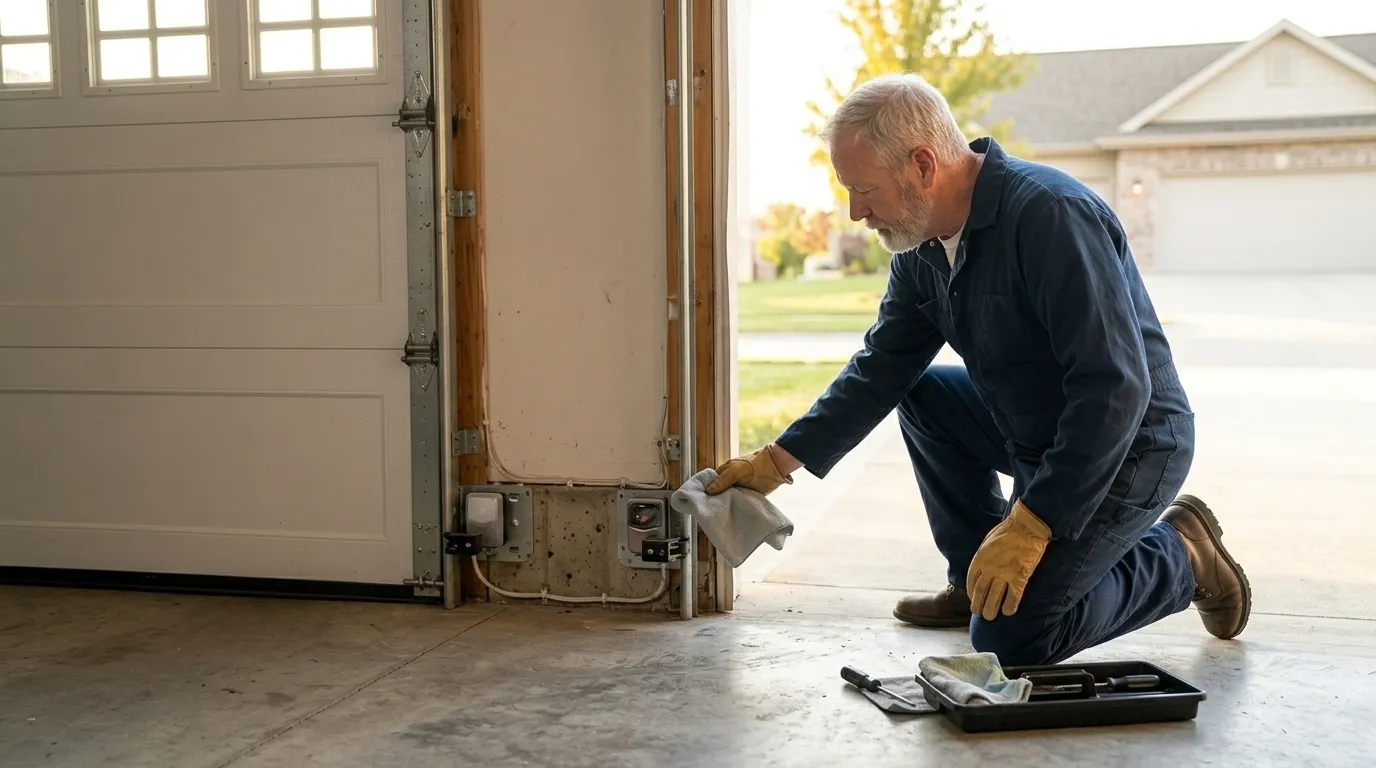
Housing in the Webster area was built mostly between 1956 and 2014, with the median landing around 1983 and most of the stock across the fourteen named nearby areas dating from the 1980s and 90s. That matters because doors from that era were rarely insulated - insulated steel and polyurethane-core doors didn't become standard until well after most of these houses went up. So what you've got, on a large share of homes here, is a single layer of steel or an older wood panel door, original or close to it, running on hardware that was never built with an R-value in mind.
That's not a flaw in the house. It's just what the market sold in 1983. The practical result: these doors transmit more heat and more moisture into the garage than a newer door would, and the tracks and springs sized for a lighter, uninsulated panel sometimes get an insulated replacement door hung on them later without anyone checking if the spring tension still matches.
That mismatch is common enough in this area's stock that it's worth asking about specifically when you call anyone for a repair.
Leaving It Alone
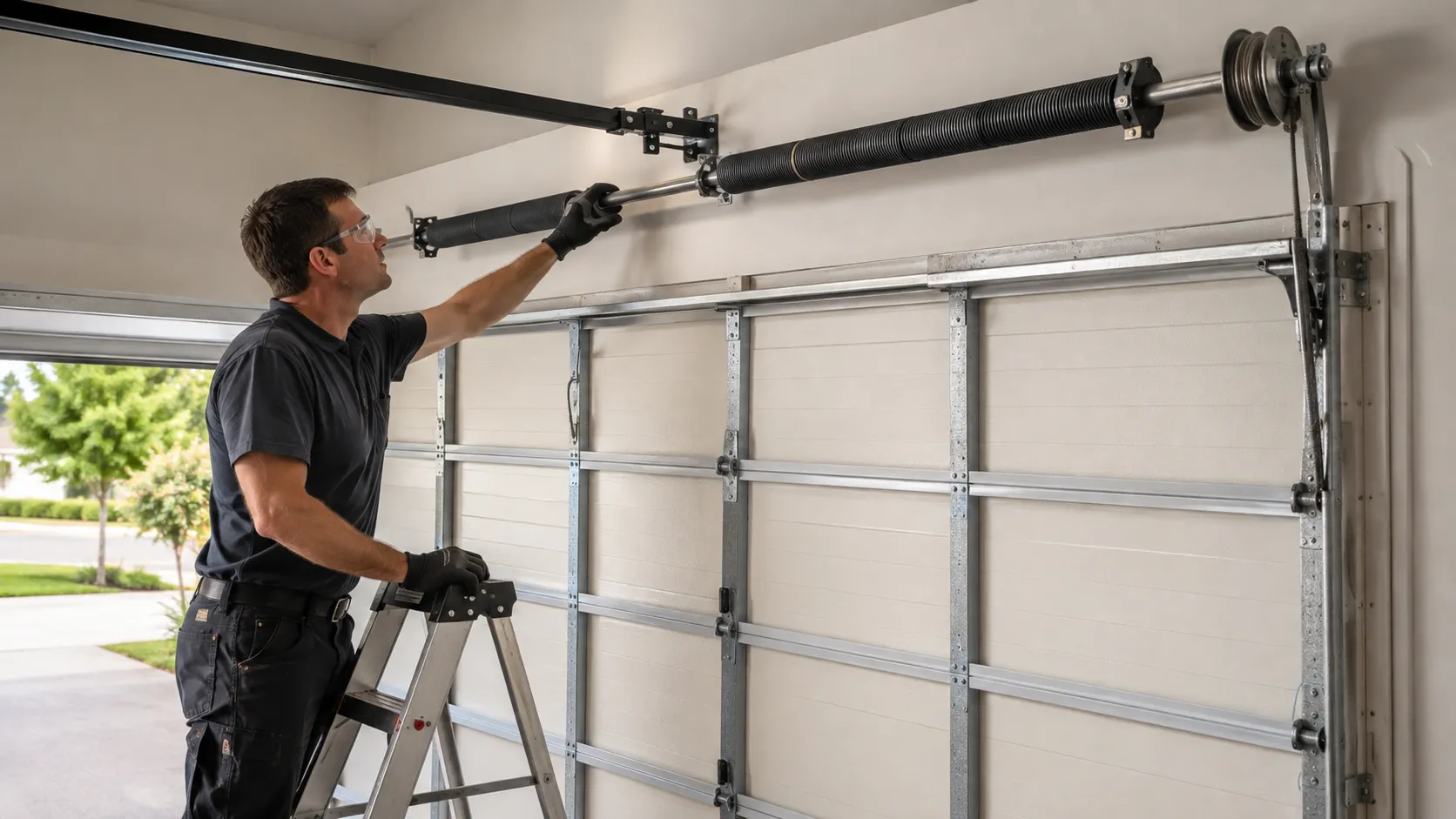
On a door from the 1983-ish median build year, ignoring a slow problem costs more here than it would on a newer door, mostly because parts for that era aren't sitting on a shelf the way current stock is. A torsion spring that's starting to sag, or a bottom panel with rust creeping past the weatherstrip, usually gives you a season or two of warning before it fails outright. Push past that window on an older, uninsulated door and you're often looking at a full section replacement rather than a patch, since matching an original panel from a 1980s door isn't always possible.
We won't pretend every delayed repair ends badly - plenty of doors run rough for years before anything actually breaks. But with median household income in this area at $77,713 and a mix of owner-occupied houses that skews older, the honest math usually favors catching the rust or the slack cable early, when it's a spring and a panel seal instead of the whole door.
What to Check
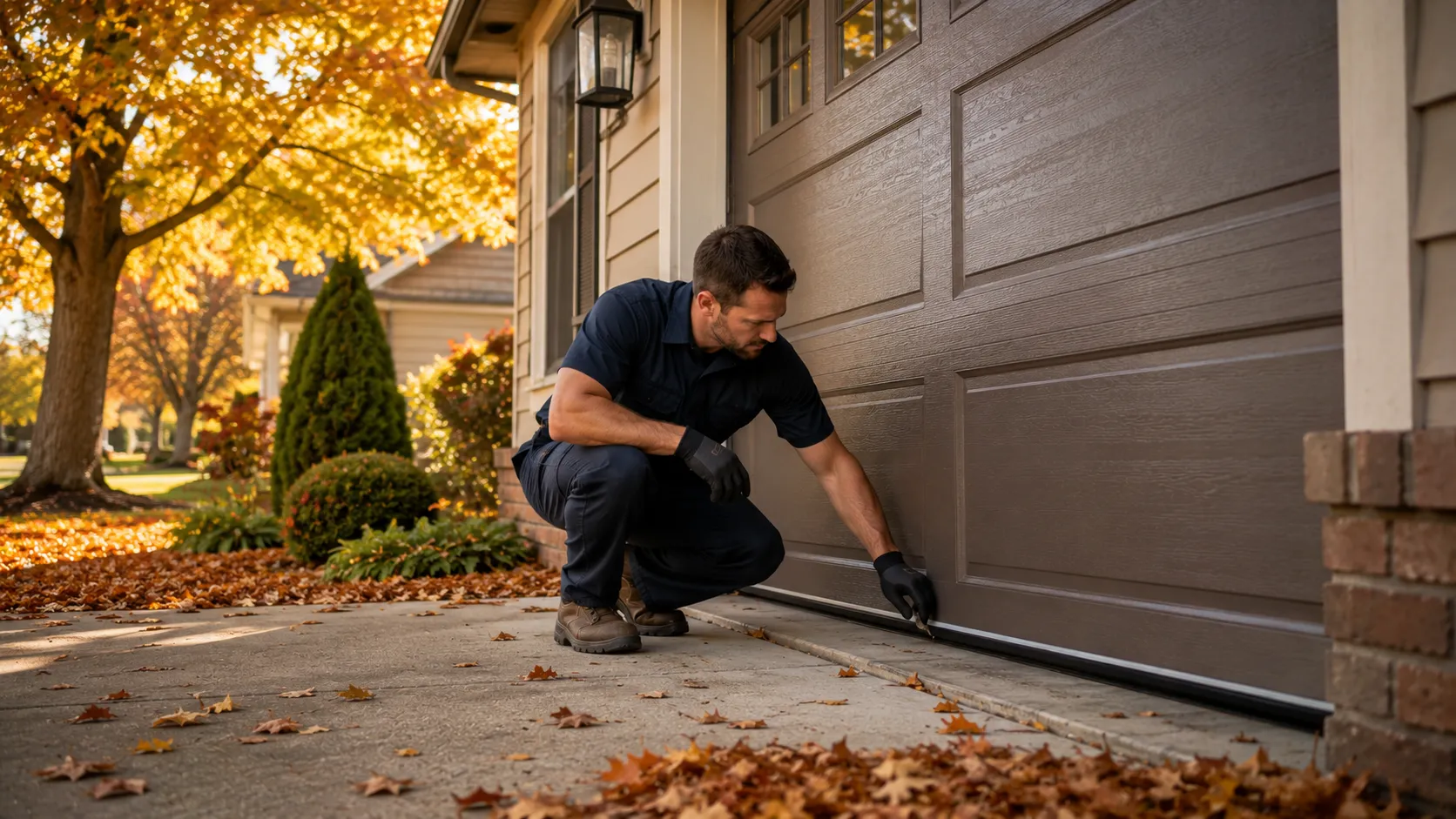
Start at the bottom panel, since that's where humidity off the Gulf side does the most damage on doors from the 1956-2014 build range - look for rust starting at the seams or bubbling under paint near the weatherstrip. Next, check the torsion spring coils for surface rust or flat spots, especially if the door's original steel was never swapped for an insulated replacement. Run a hand along the track bolts; on houses from the 1980s median era, these back out slowly rather than snapping, so a quarter-inch of play is worth tightening before it becomes a quarter-inch of misalignment.
Last, listen for the door working harder than it should on the way up - an uninsulated panel that's absorbed moisture over the years gets heavier, and openers sized for the original weight start to strain. None of this requires tools you don't already have except a wrench and a flashlight. We won't tell you every door needs a full inspection every year - most don't.
But a five-minute look at these four spots twice a year catches almost everything that turns expensive.
How We Can Help
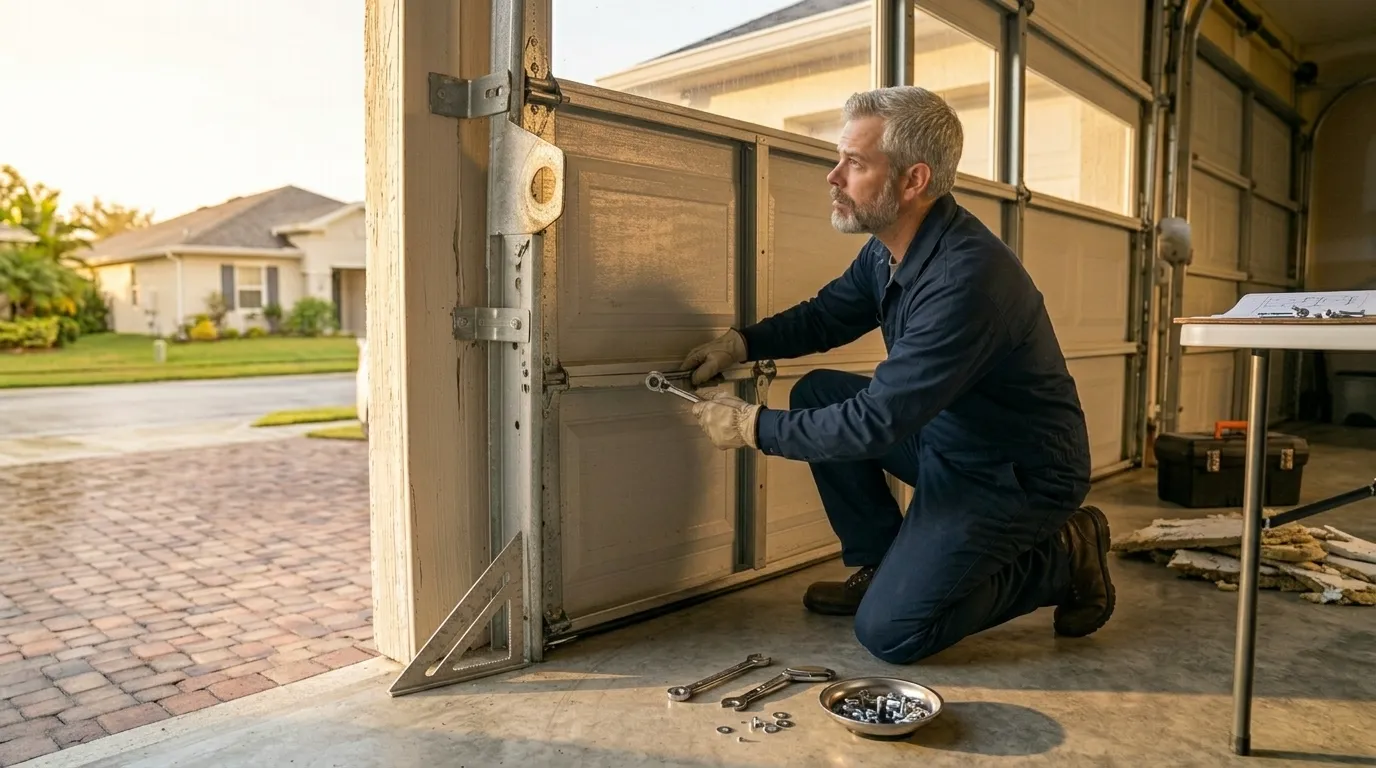
Garage Door Repair
Springs, cables, tracks, rollers, and openers fixed by a tech who explains the problem before touching anything.
Learn more →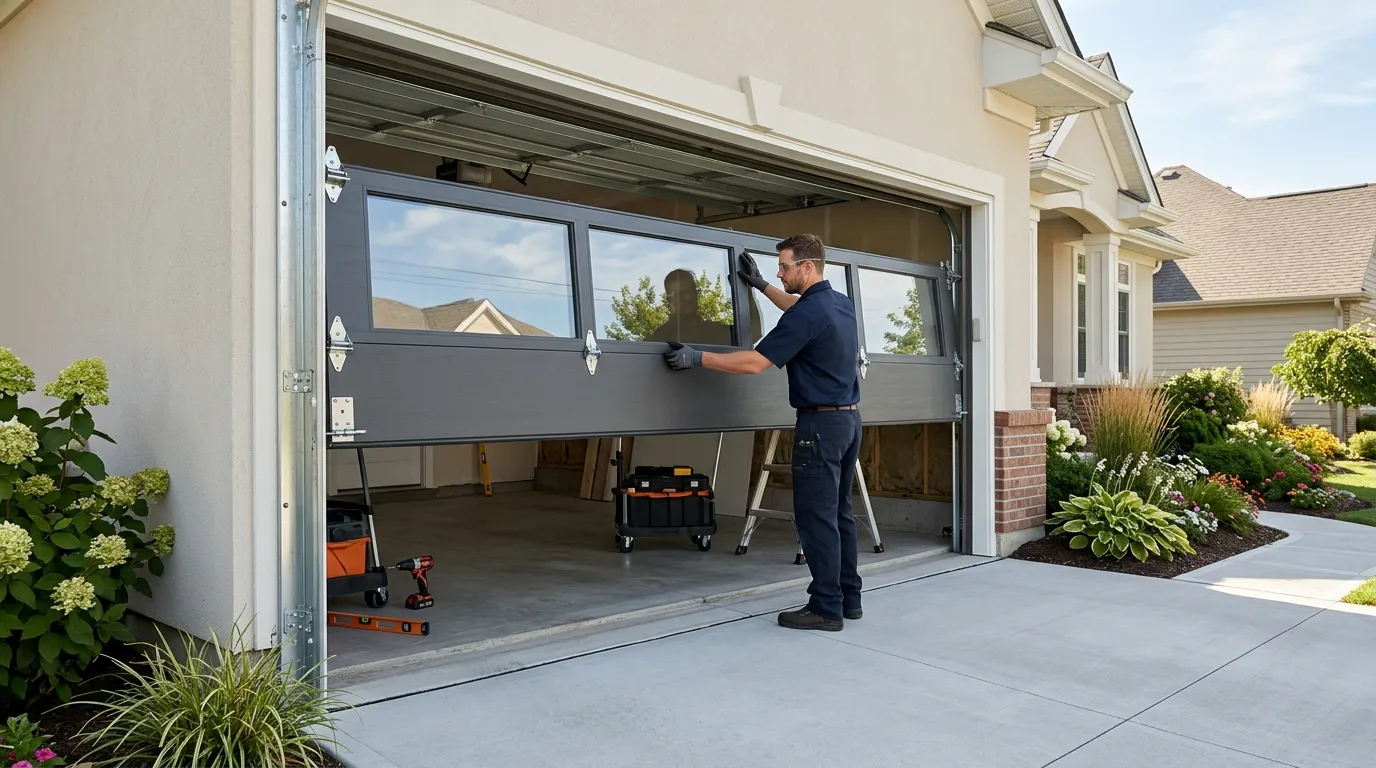
Garage Door Installation
New sectional doors sized and installed for the housing stock actually built in this area.
Learn more →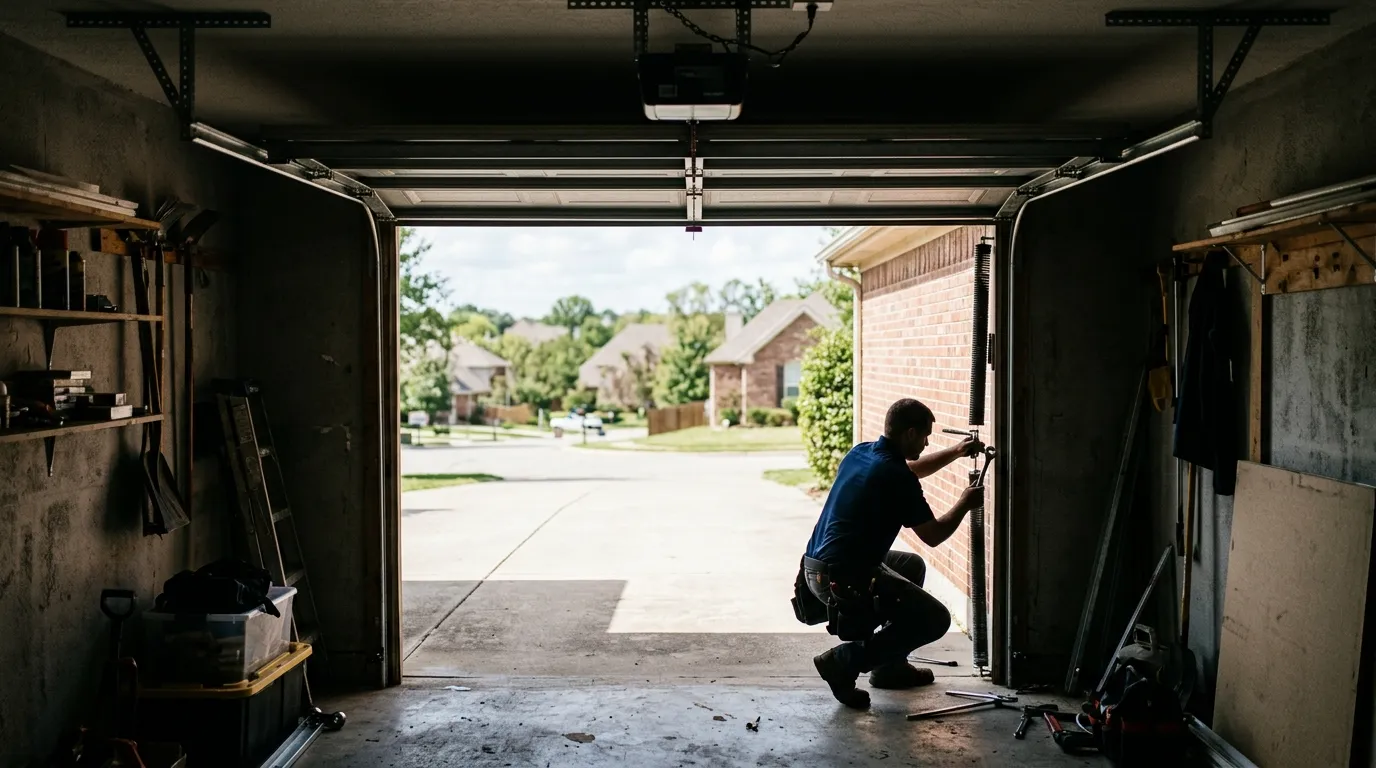
Garage Door Service
Tune-ups, lubrication, and safety checks that catch a small problem before it becomes a service call.
Learn more →Frequently Asked Questions
Why does my garage door rust along the bottom even though we don't get hard winters here?
Webster's climate is mild with only occasional freeze risk, but it stays humid most of the year given the proximity to Clear Lake and South Shore Harbour. That constant moisture works into seams and roller brackets on older steel doors, especially ones built before insulated cores were standard, causing slow rust rather than the freeze-crack damage seen further north.
Is my garage door likely insulated given when this area was built?
Housing here was mostly built 1956-2014 with a median around 1983, and most stock across the nearby fourteen areas dates to the 1980s and 90s. Insulated steel doors weren't standard then, so unless a prior owner replaced it, your original door is probably a single uninsulated layer.
If someone replaced the door but kept the old opener, could that cause a problem?
Yes. A heavier insulated replacement panel on hardware and spring tension sized for a lighter original 1980s-era door is a mismatch we see in this area. It's worth confirming the spring tension was adjusted when the door was swapped, since an unmatched setup wears the opener and cables faster.
Have a Door That Needs a Second Opinion?
Call and describe what it is doing - we will tell you what it likely is.