
Webster Garage Door Guide
Garage Door Noises That Mean Something in Webster
Webster homes built mostly in the 1980s and 90s wear hardware differently than newer builds. Here's how to tell a noise that means something from one that doesn't.
- Licensed & Insured
- Same-Area Service Calls
- Upfront Pricing
What the Weather Here Does to It
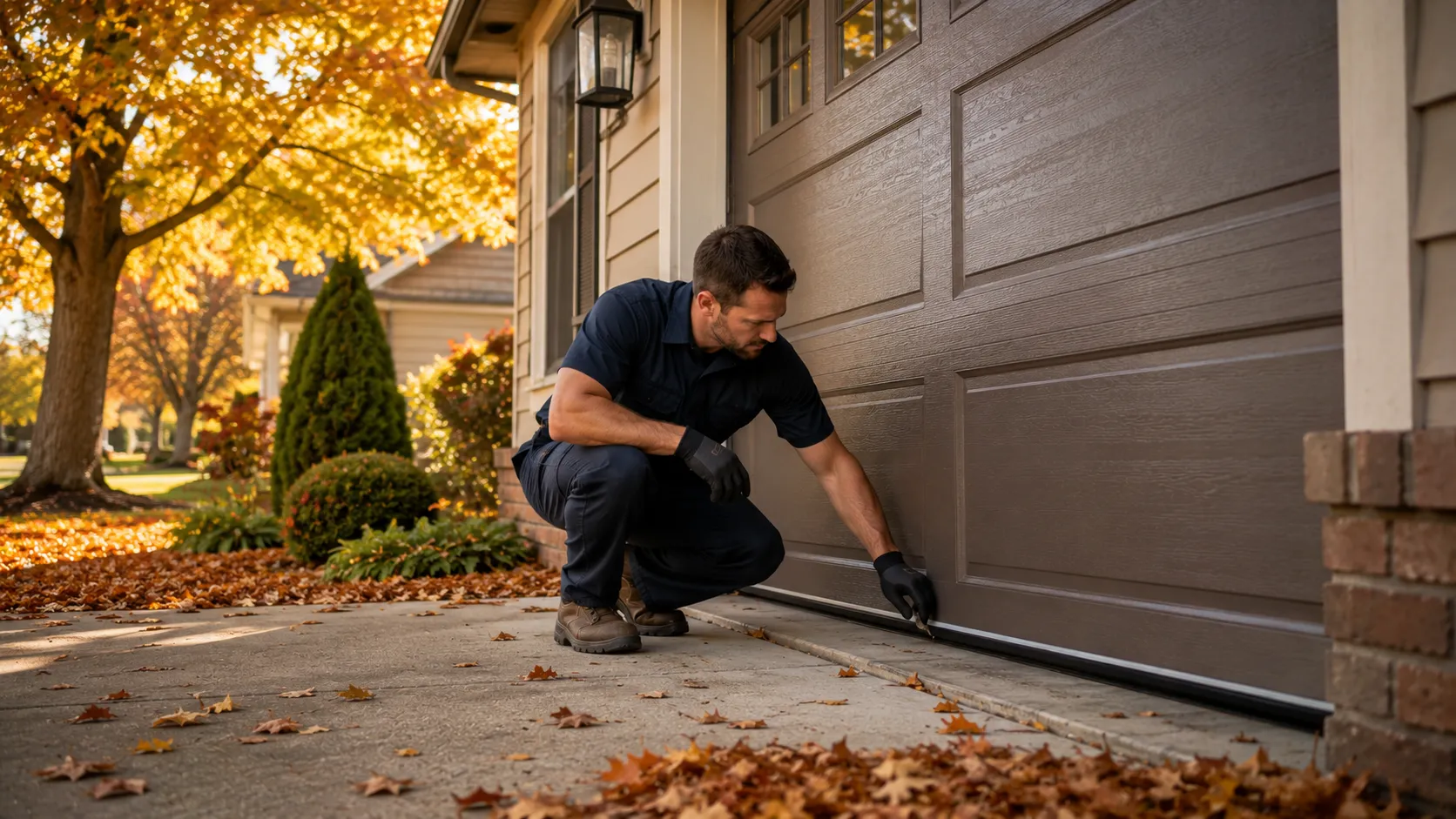
Webster sits in a mild climate band with occasional freeze, not the deep swings that crack hardware fast, but the moisture that comes with it is steady work on anything metal. Torsion springs, hinges, and roller shafts don't rust overnight here - they oxidize slowly, year after year, and the first sign is almost always sound before it's a failure. A door that's quiet in January and starts groaning by August isn't reacting to cold, it's reacting to humidity working into unlubricated steel.
The houses closest to the water - Nassau Bay two miles out, Taylor Lake Village at five, South Shore Harbour four miles east - sit in slightly heavier air than the inland stretches, and owners there tend to hear roller squeal and hinge chatter a season or two before the rest of the service area does. That's not a guess about your specific street, it's the general pattern this climate band produces on unsealed steel hardware.
Original bearings and springs on homes from the 1980s and 90s building wave are past the point where a little noise is nothing. It's usually the metal telling you it's dry.
What Is Going On
Most of the housing stock in this area went up between 1956 and 2014, with the bulk of it - across all fourteen named neighborhoods in the service area - built in the 1980s and 90s. That matters because doors and openers installed with a house from that era are now 25 to 45 years into hardware that was never meant to run maintenance-free.
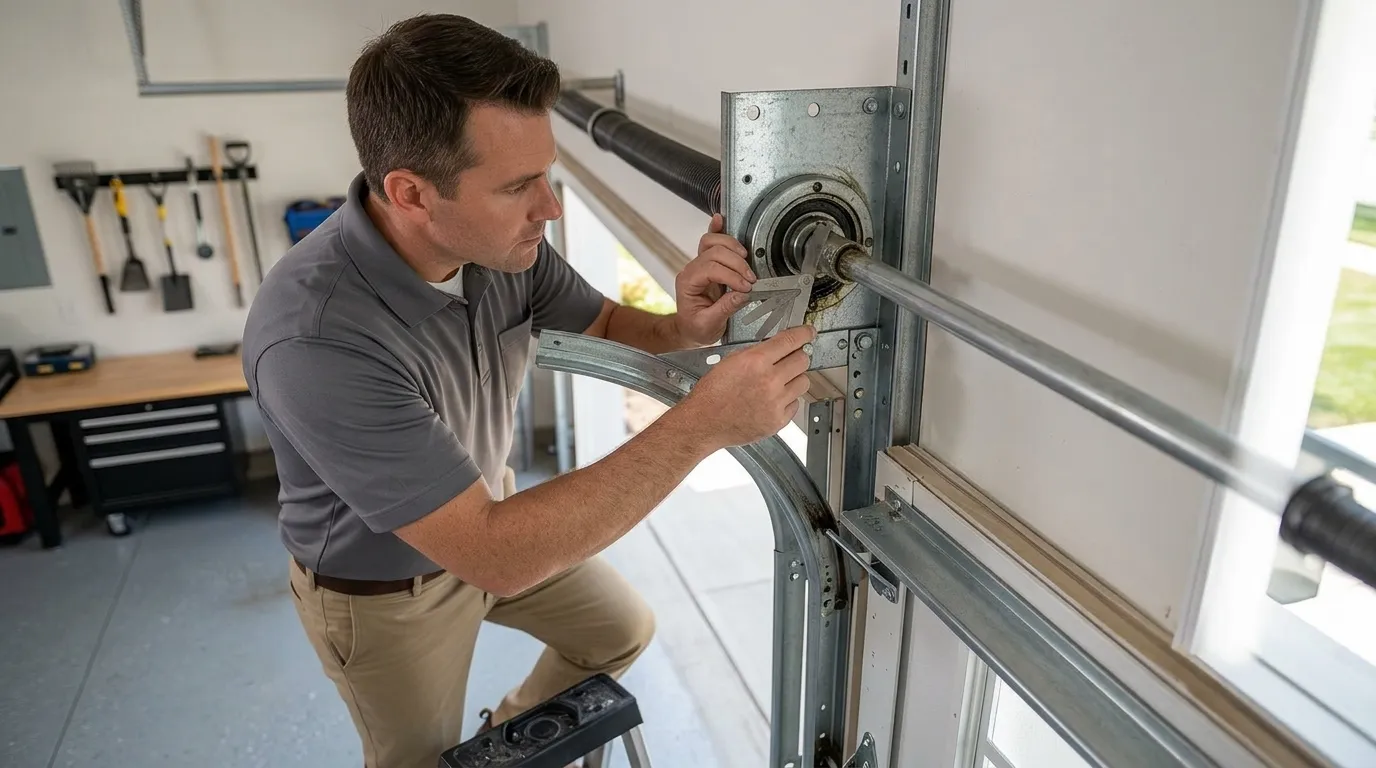
A grinding sound on the way up is often a worn roller riding a track that's slightly out of gauge. A sharp bang partway through the cycle is frequently a torsion spring losing tension unevenly, which shows up as a pop rather than a smooth stop.
Rattling that gets louder near the top of the travel usually points to a loose header bracket, common on original mounting hardware from these builds that's been through decades of thermal cycling even in a mild climate. None of this is dramatic. It's a door built when Reagan was president, still running, and telling you about it.
Leaving It Alone
A squeak you can live with for a while. A grinding or scraping sound you can't - that's metal on metal, and it gets worse, not better, the longer it runs. On original 1980s and 90s hardware, a spring that's started to bind or a roller that's chipped will not fix itself, and running the opener against resistance shortens the life of the motor along with the door parts.
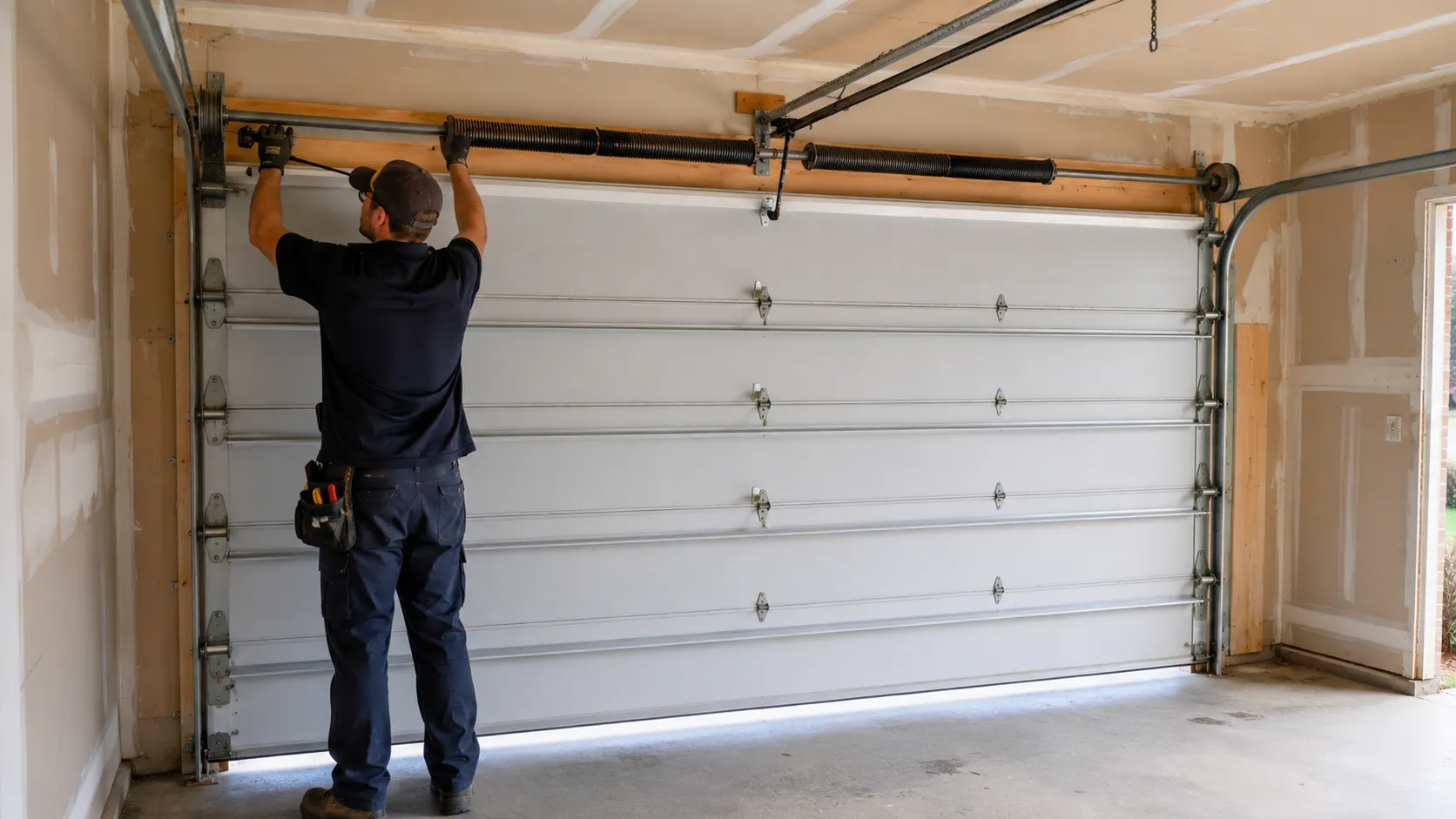
Here's the honest limit: if the noise is coming from a spring, don't take the cover off and look. Torsion springs on doors this age are under real load and they are not a homeowner repair - that's not caution talk, that's where people get hurt. Everything else on this list is safe to check yourself.
What to Check
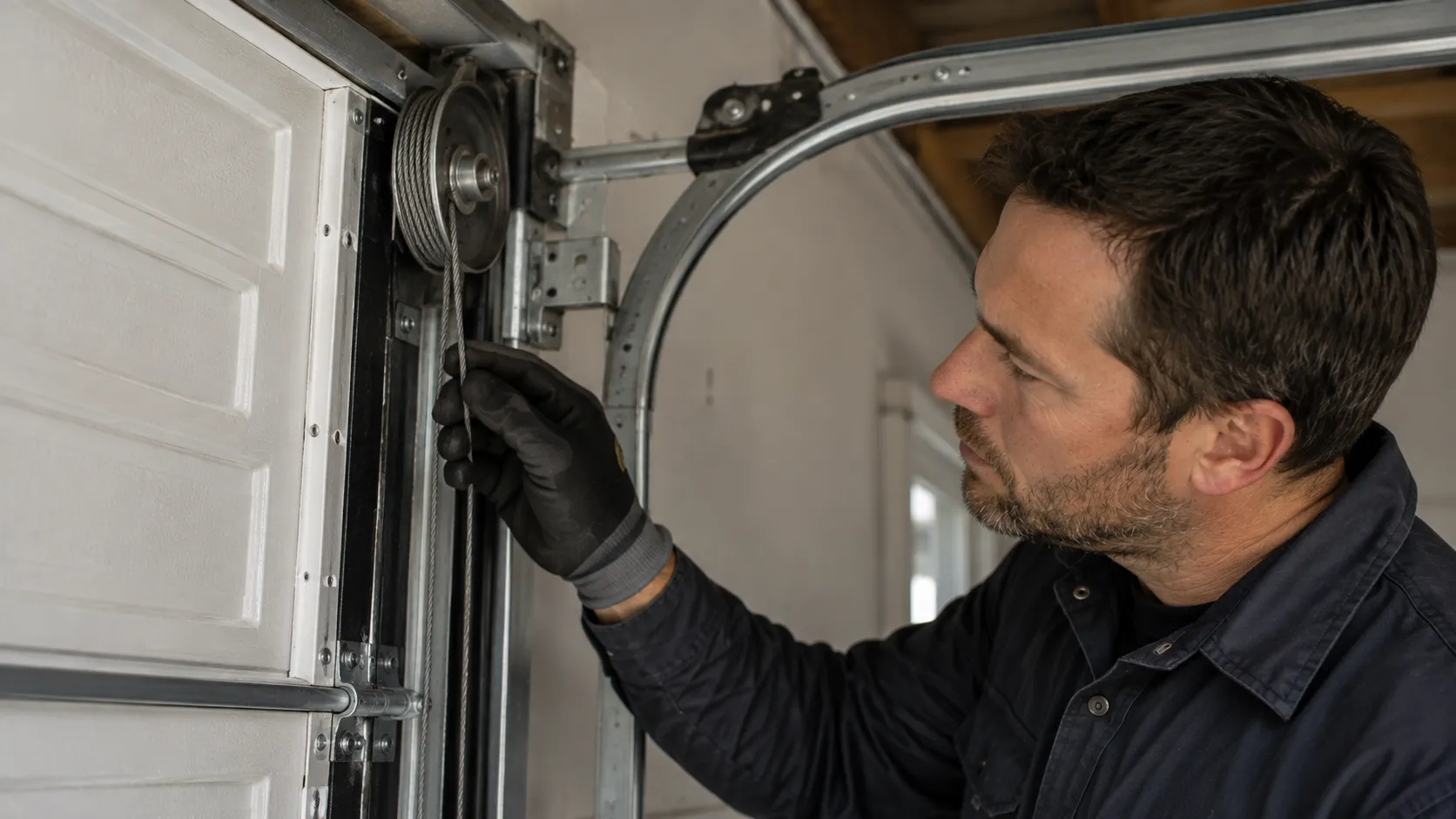
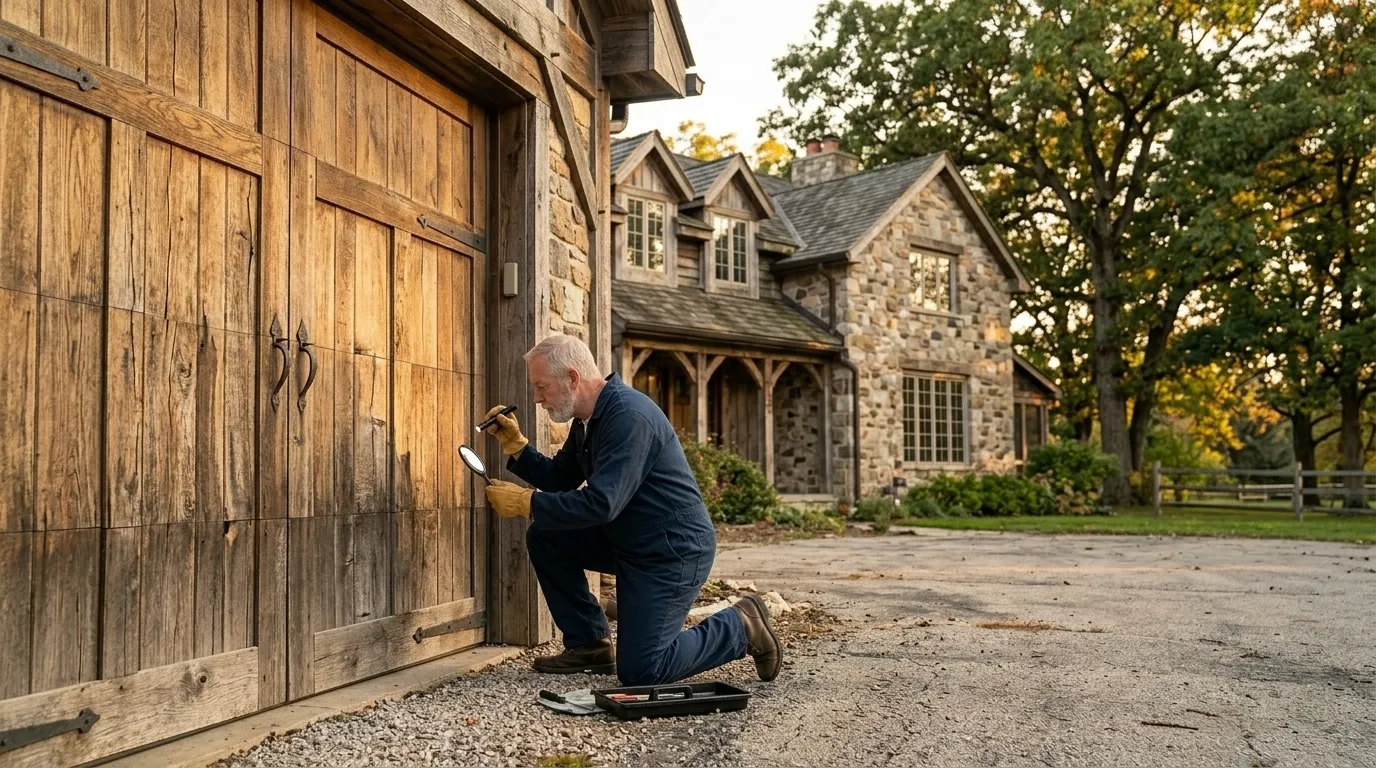
Start with the tracks. Run a hand along them (door down, opener unplugged) and feel for rust flaking or a section that's pulled slightly away from the wall - common on homes from the 1980s and 90s wave once the original anchors start to give. Next, check every roller for a flat spot or a crack in the nylon; a bad roller announces itself with a rhythmic thump that matches the door's travel speed.
Listen for where in the cycle the noise happens. Start of travel usually means the opener or top bracket. Mid-travel is almost always the rollers or track.
End of travel, especially a bang, points at the spring or the cable drum. If you can't place it, or it's gotten louder over a few weeks, that's the point to call someone rather than keep running it.
How We Can Help
Garage Door Repair
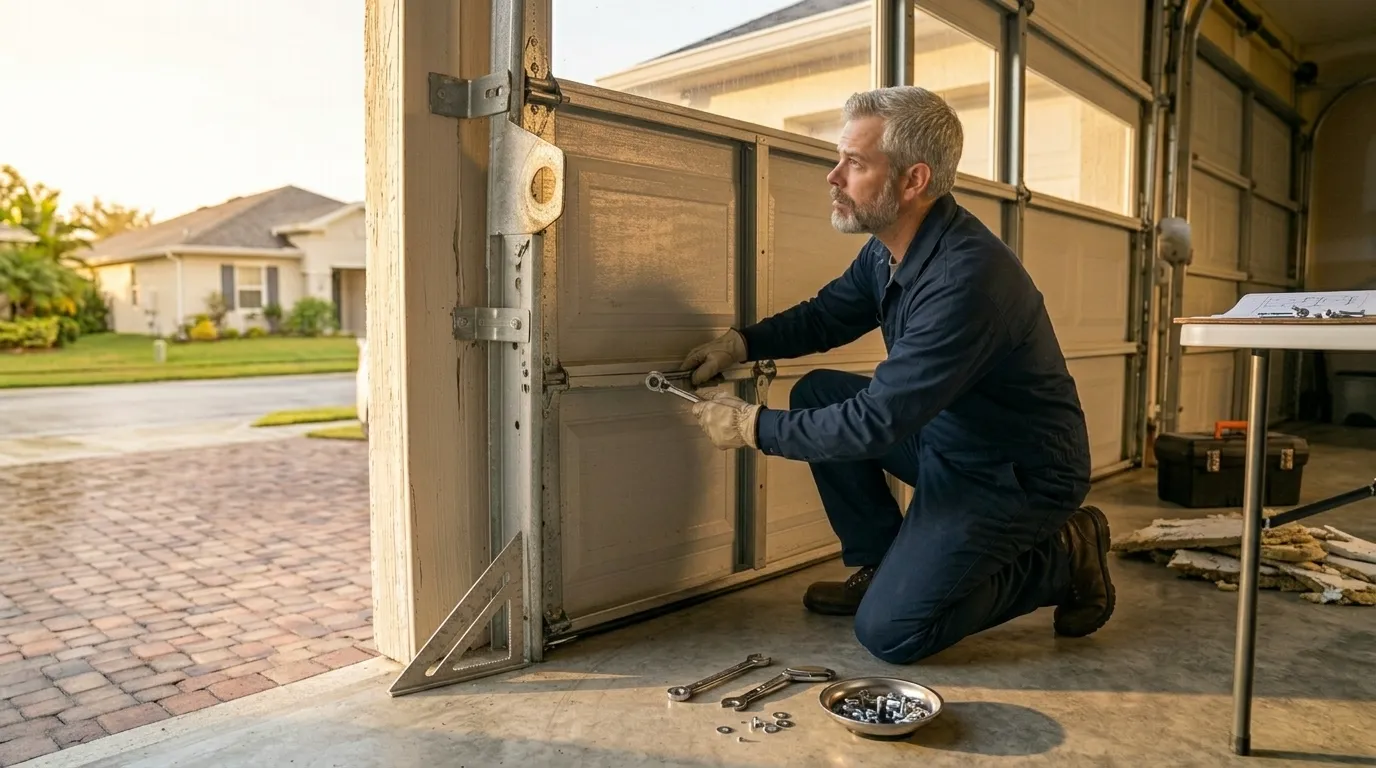
Springs, cables, tracks, rollers, and openers fixed by a tech who explains the problem before touching anything.
Learn more →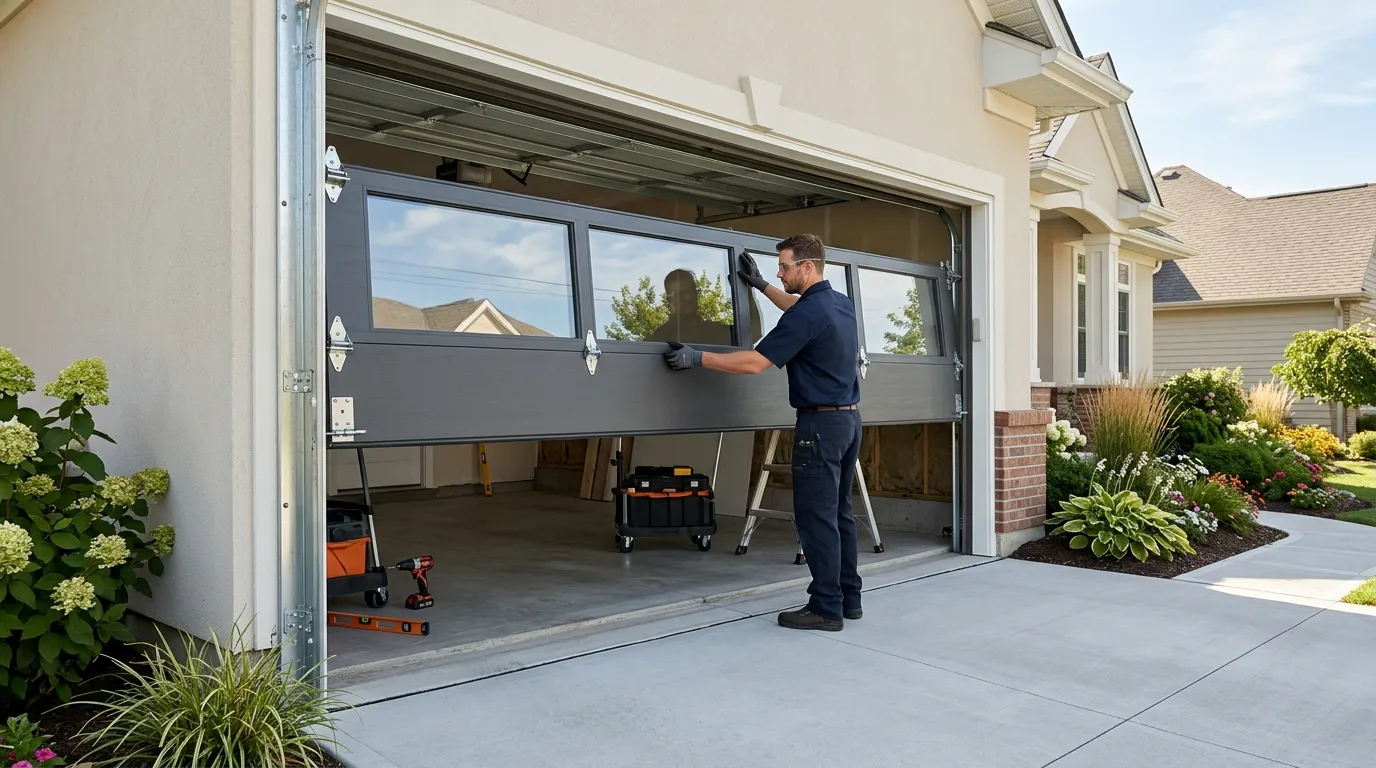
Garage Door Installation
New sectional doors sized and installed for the housing stock actually built in this area.
Learn more →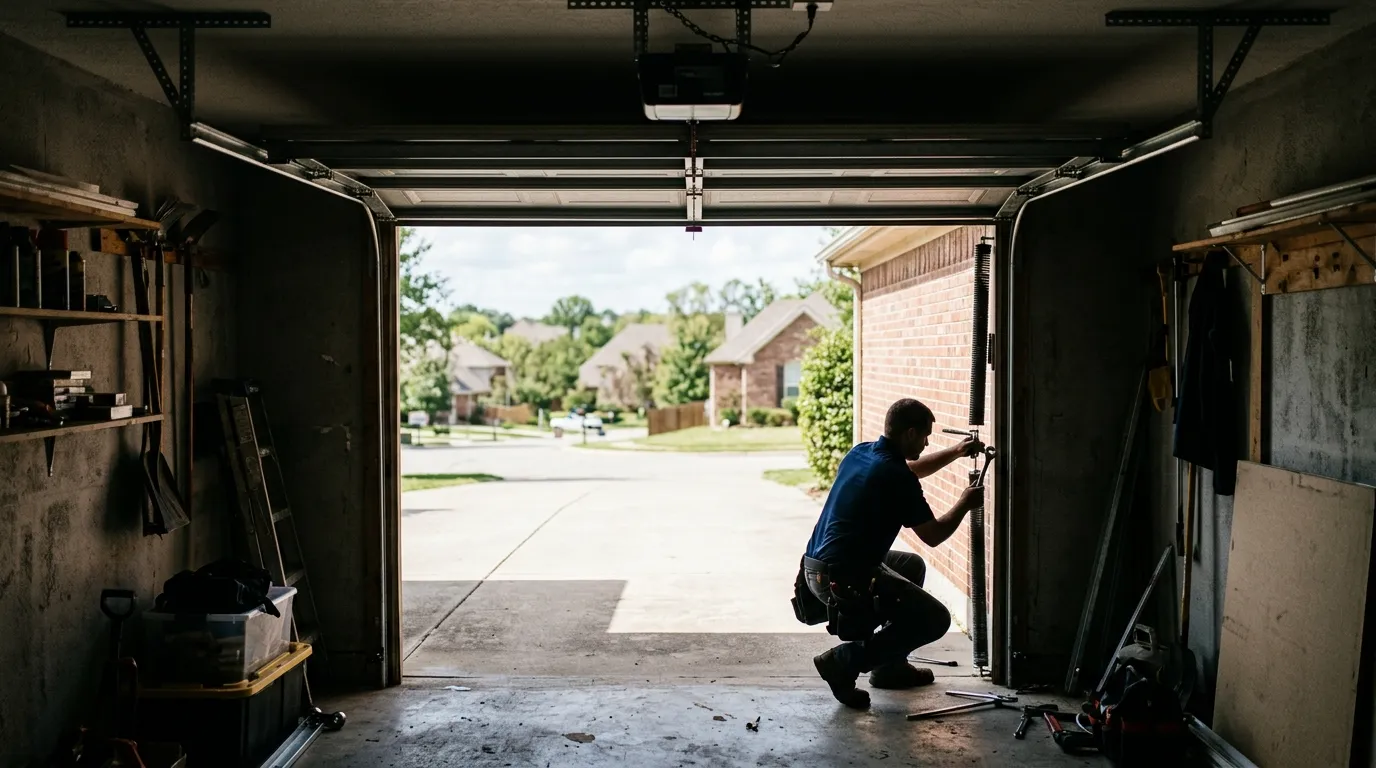
Garage Door Service
Tune-ups, lubrication, and safety checks that catch a small problem before it becomes a service call.
Learn more →Frequently Asked Questions
My door in Webster squeaks but still opens fine - do I need to worry?
A dry squeak on its own usually just means the rollers or hinges need lubrication, especially on hardware from the 1980s and 90s building wave that's been running unmaintained for decades. Worry more if the squeak turns into a grind or the sound gets louder week over week. That progression, not the squeak itself, is the warning sign.
Is the humidity near the water actually harder on garage doors?
Homes closer to the water, like those near Nassau Bay or South Shore Harbour, sit in slightly heavier moisture than inland stretches of the service area, and that speeds up surface rust on unsealed hardware. It's a gradual effect, not a sudden one, but it does mean noise often shows up a bit earlier on hardware near the water.
Can I just tighten the bolts myself if the door is rattling?
Loose header brackets and track bolts are safe to check and tighten yourself. Just don't go near the torsion spring or its anchor bolts - those are under load and not a homeowner fix regardless of how simple the fastener looks.
Have a Door That Needs a Second Opinion?
Call and describe what it is doing - we will tell you what it likely is.