
Webster Garage Door Guide
What a Service Call Actually Covers in Webster
What a Webster Garage Door Pros service call actually checks and fixes, tied to this area's 1980s-90s housing stock and mild Gulf-coast climate with occasional freezes.
- Licensed & Insured
- Same-Area Service Calls
- Upfront Pricing
What the Weather Here Does to It
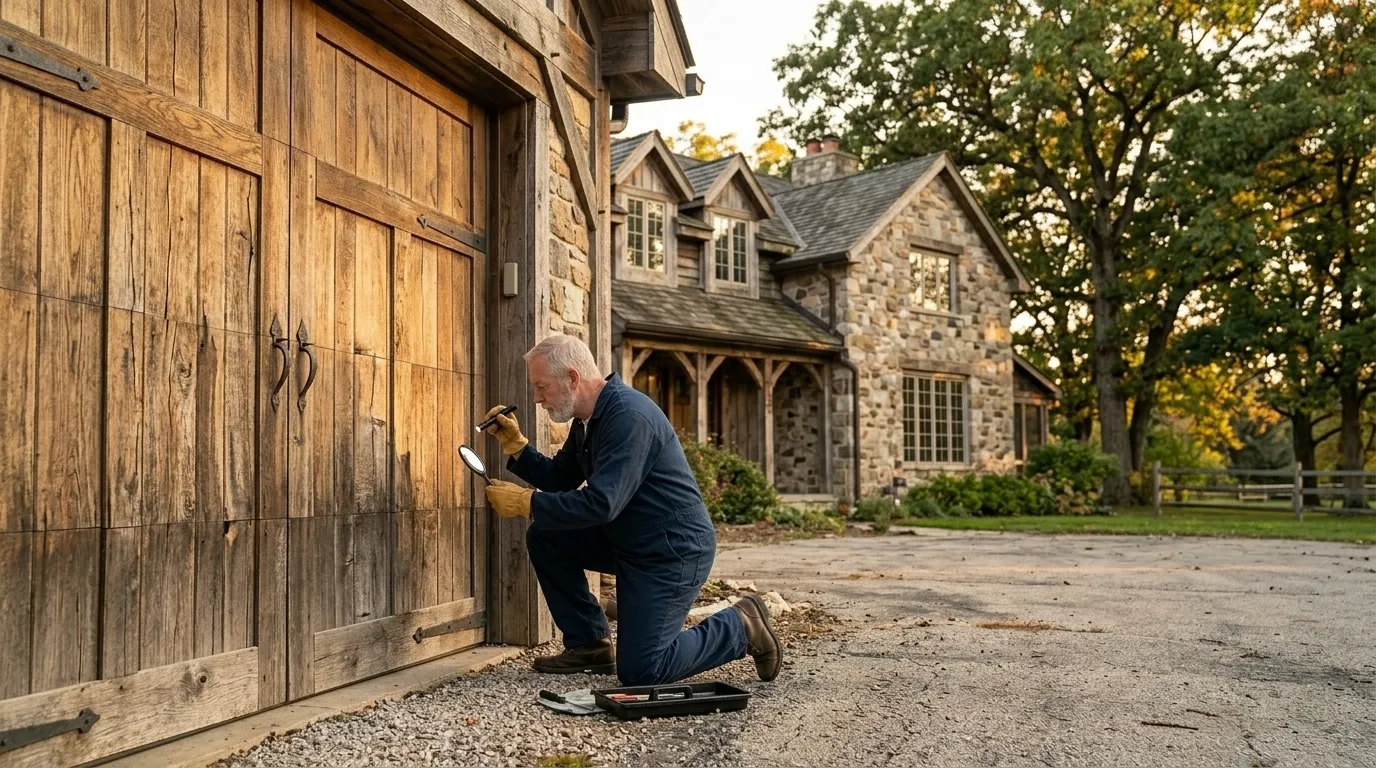
Webster sits in a mild climate band with only occasional freezes, not the kind of hard winter that cracks a slab or seizes a spring outright. The bigger issue is humidity and heat cycling, not cold.
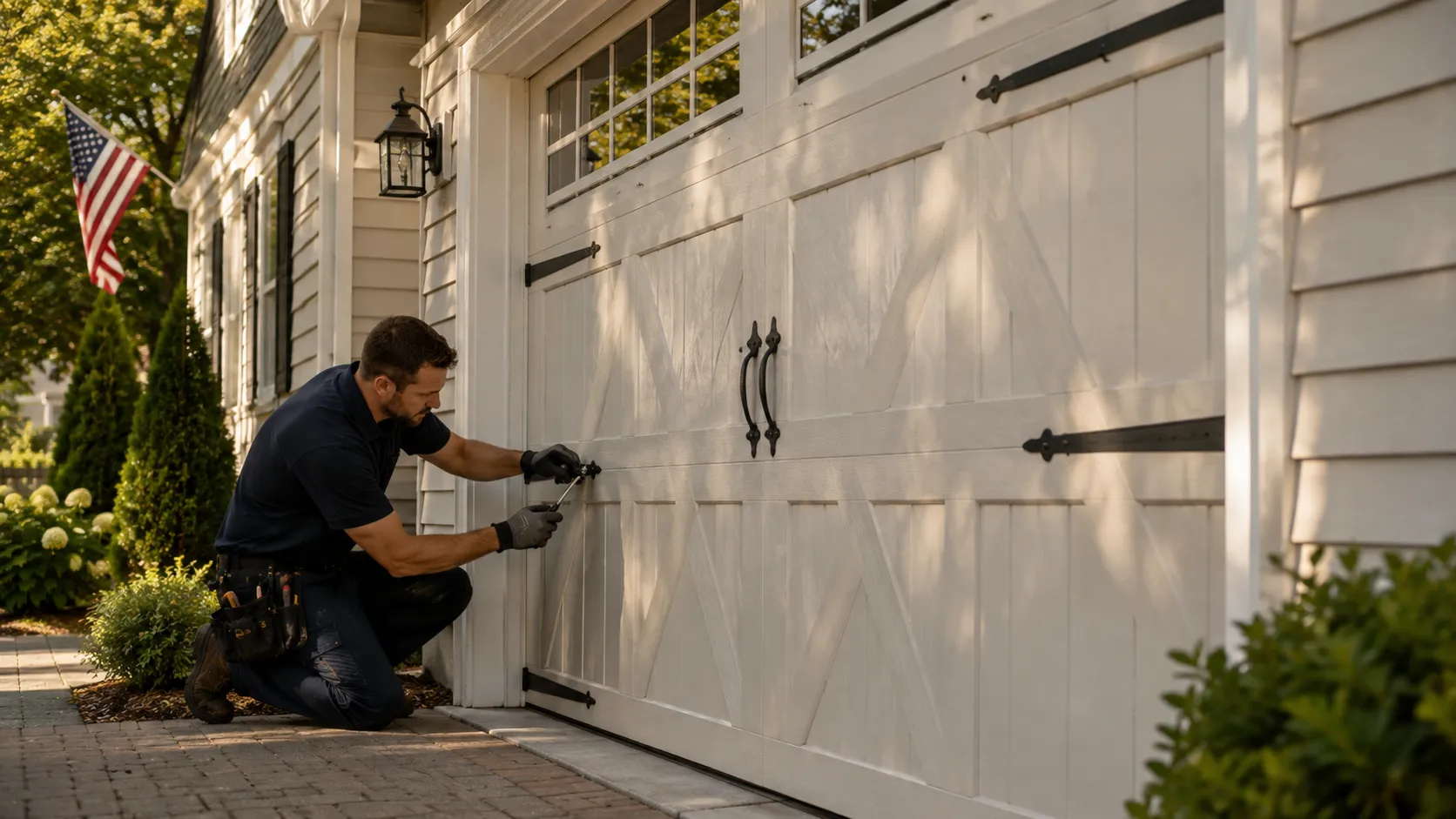
A steel door skin expands in the afternoon sun and contracts overnight, and it does that almost every day of the year here instead of a few weeks in January. Over a couple of decades that cycling works on the fasteners, the hinge pivots, and the weatherstrip at the bottom panel long before it works on the spring itself.
Because hard freezes are rare, we don't see the classic "spring snapped on the coldest morning of the year" call much in this service area. What we see instead is slow fatigue - a spring that's lost tension gradually, rollers that have gone stiff from grit and moisture rather than ice, and openers whose gears wear from constant use in warm weather rather than one dramatic cold snap. A service call here starts by asking what kind of wear this specific climate produces, not by assuming a script written for a colder state.
One honest limitation: we can't tell you over the phone whether heat cycling or straight age is the bigger factor on your door. That's a five-minute look with the door open and closed a few times, not a guess.
What Is Going On
Housing across the Webster service area went up mostly between 1956 and 2014, with the median year sitting around 1983, and most of the doors we replace come out of that 1980s and 90s stretch of construction spread across the fourteen named areas that make up this service footprint. That matters because a door and opener installed in, say, 1988 is on hardware two or three product generations behind what's sold today - different spring winding, different drum sizes, sometimes a track profile nobody stocks in the size the original builder used.
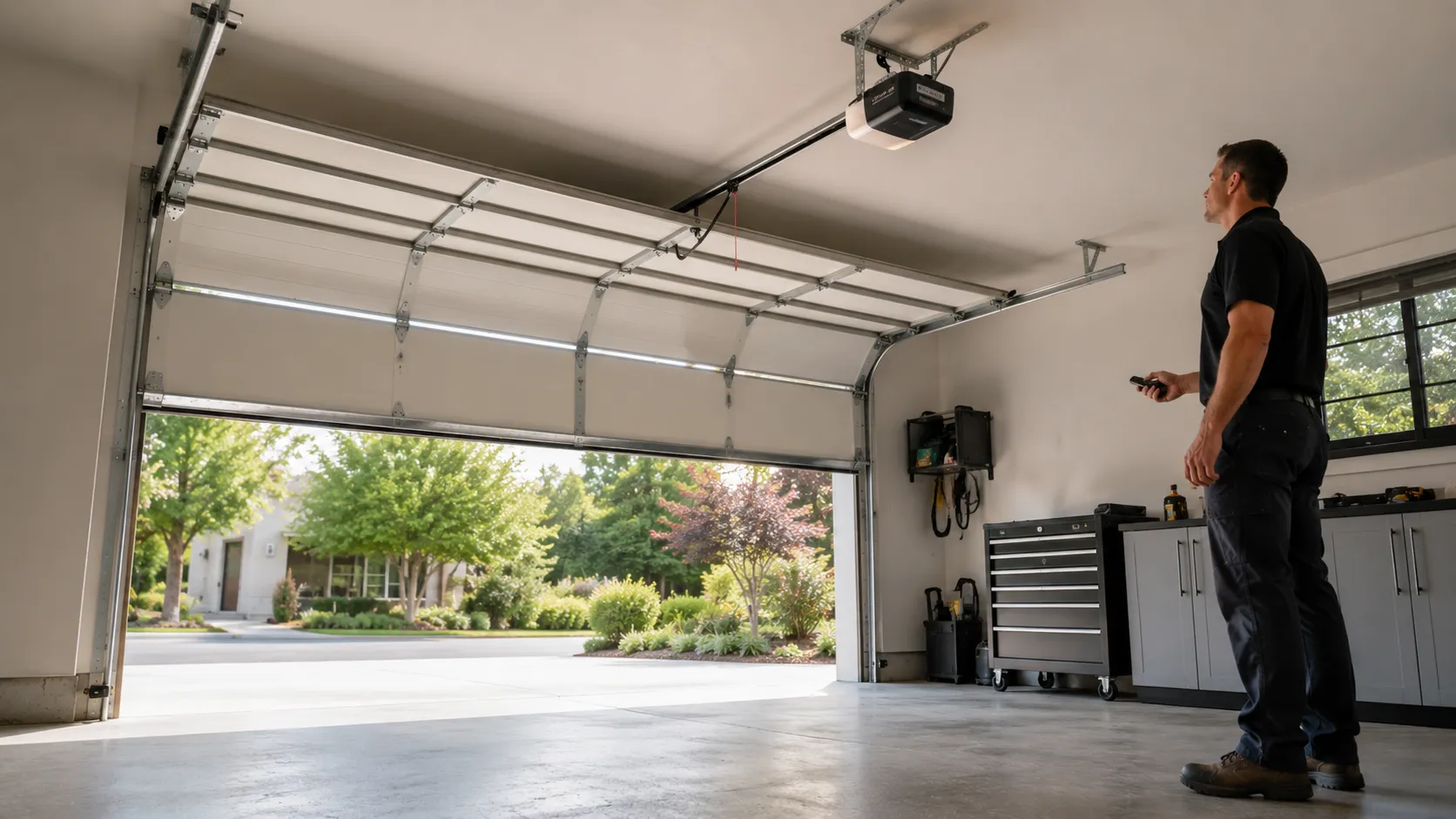
A proper service call starts with figuring out which era the door belongs to before touching anything. We check the spring type and count the coil winds, look at whether the track is the original rolled steel or a later replacement, and see if the opener has been swapped at some point (a lot of owners replace the opener once but leave the door hardware alone, which creates a mismatch in load rating). We also check the panels themselves - doors from the earlier end of that 1956-2014 range are often heavier gauge steel with less insulation than what went in during the later years of that span.
We don't open the call by quoting a fix. We open it by figuring out what generation of door we're actually looking at, because the parts and the labor both depend on that answer.
Leaving It Alone
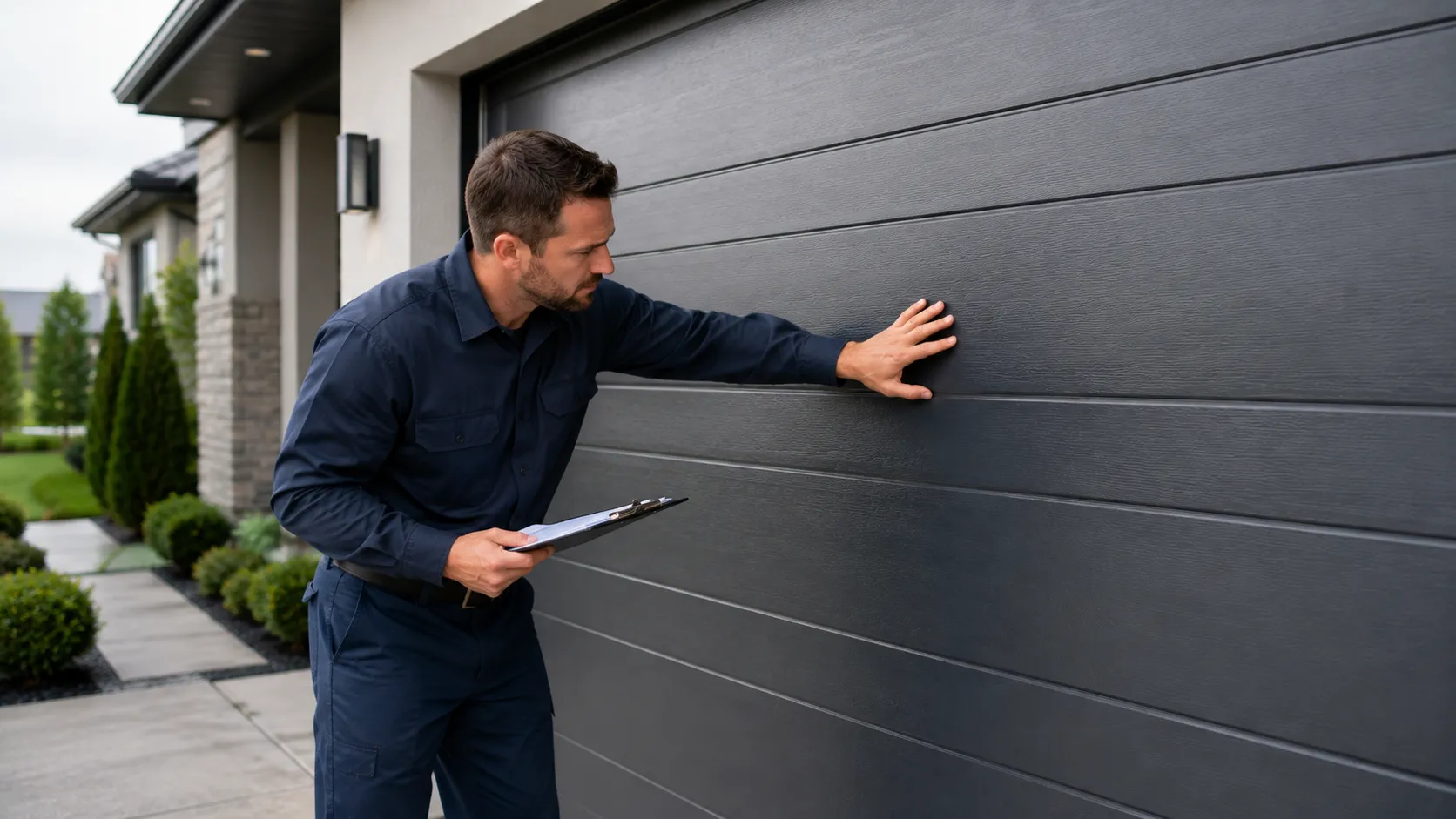
A door that's a little stiff or a little loud doesn't need to become an emergency, but it also doesn't fix itself. With 20,629 owner-occupied houses across this service area, most of what we find behind a slow-moving door is original hardware from that same build era - not a mix of retrofits - which means the wear is usually uniform across the whole system: spring, cable, rollers, and track all aging together rather than one part failing in isolation.
Left alone, a spring that's lost tension makes the opener do work it wasn't built to do, and that's usually what actually fails first - not the spring, the opener motor or the gear set inside it. By the time the opener starts grinding or the door reverses on its own, you're often looking at two repairs instead of one.
Here's the limitation worth saying plainly: sometimes leaving it alone is the right call. If a door is functioning fine and just sounds a little rough, chasing every noise with a repair visit isn't worth your money.
We'd rather tell a homeowner to wait and watch than run up a bill on something that isn't going to fail this year. Not every noise is a job.
What to Check
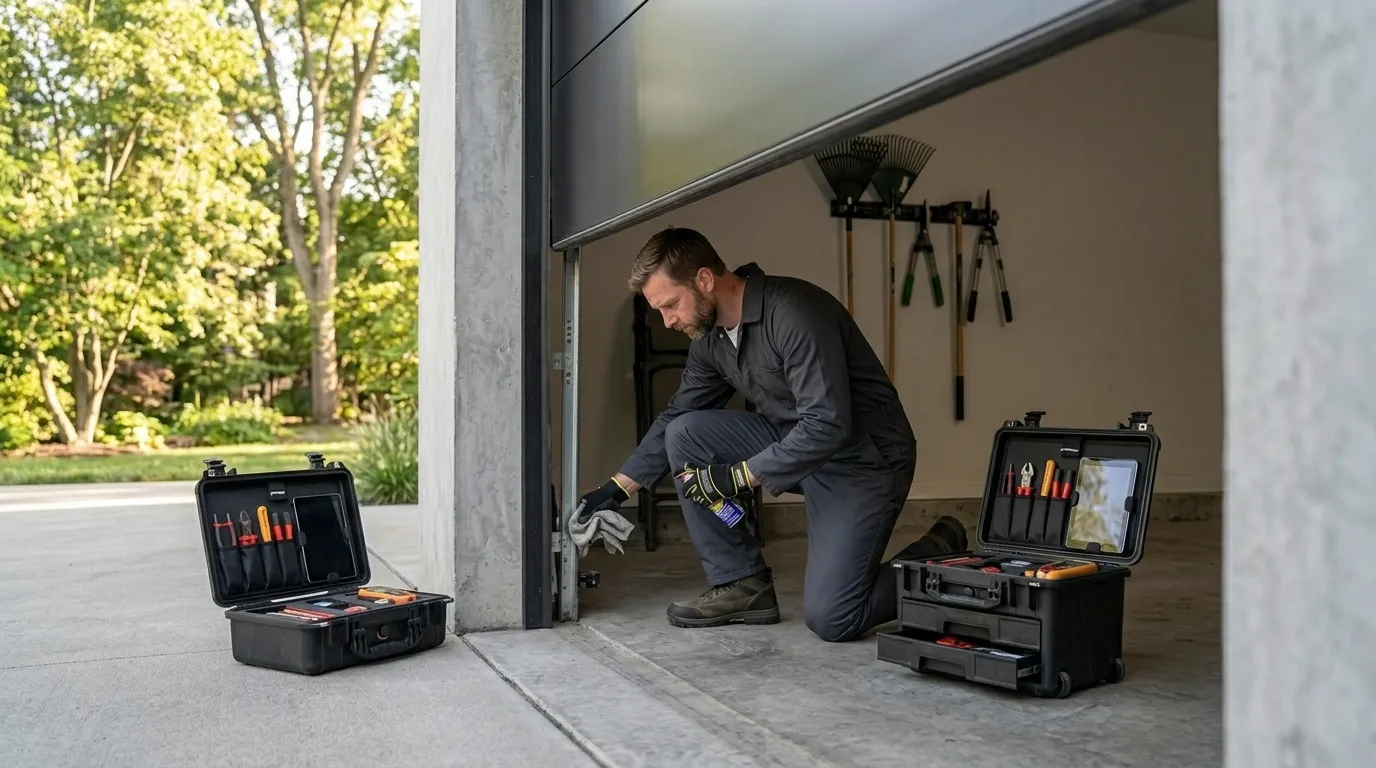
Before you call, a few things take two minutes and tell us a lot. Stand the door open halfway and let go - it should hold roughly in place.
If it drops or shoots up, the spring tension is off and that's not a DIY adjustment; that's the first thing we'll look at. Run your hand along the track for gouges or a spot where it's pulled away from the wall studs, common on doors from the earlier end of the 1956-2014 range where mounting hardware wasn't as heavy as later code required.
Listen for where the noise comes from - rollers grinding is different from a cable slapping the track, and that difference changes what we bring on the truck. Check the bottom weatherstrip for gaps; on this coast that's less about keeping out cold and more about keeping out the moisture that swells wood-frame openings.
Nassau Bay is two miles from Webster, Taylor Lake Village five, and Kemah six, and calls across that stretch tend to turn up the same handful of issues because the housing went up in the same building boom. If you're near Clear Lake or South Shore Harbour and something on this list stands out, that's the detail worth mentioning when you call, not the general complaint that "the door is acting up."
How We Can Help
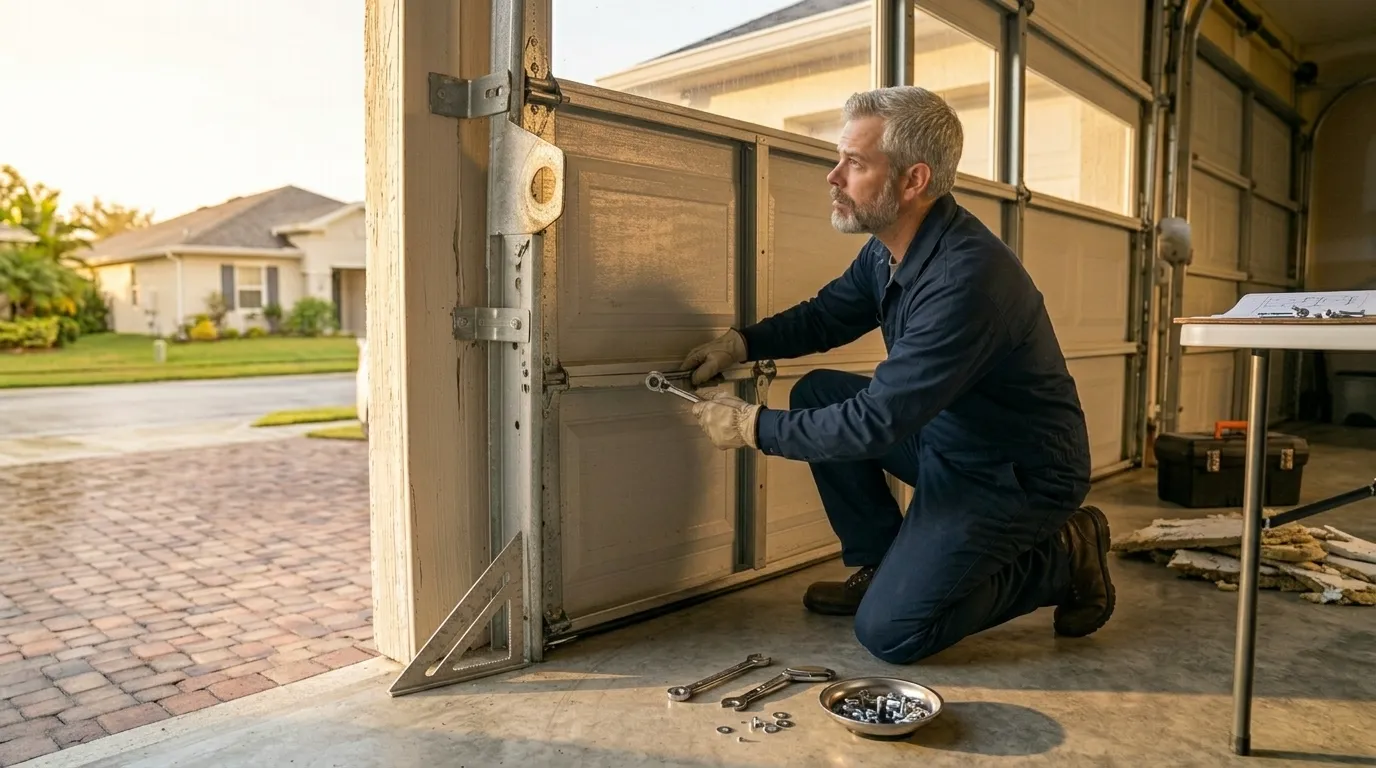
Garage Door Repair
Springs, cables, tracks, rollers, and openers fixed by a tech who explains the problem before touching anything.
Learn more →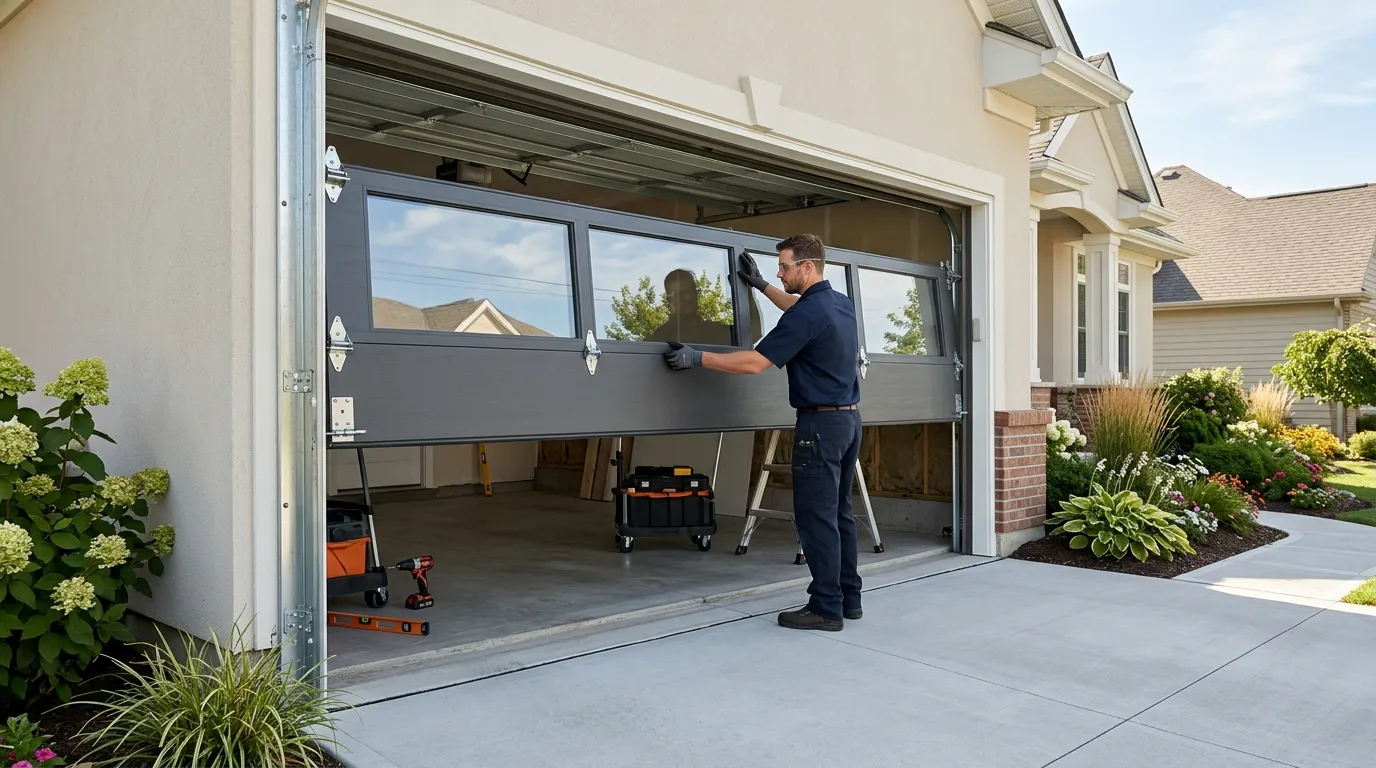
Garage Door Installation
New sectional doors sized and installed for the housing stock actually built in this area.
Learn more →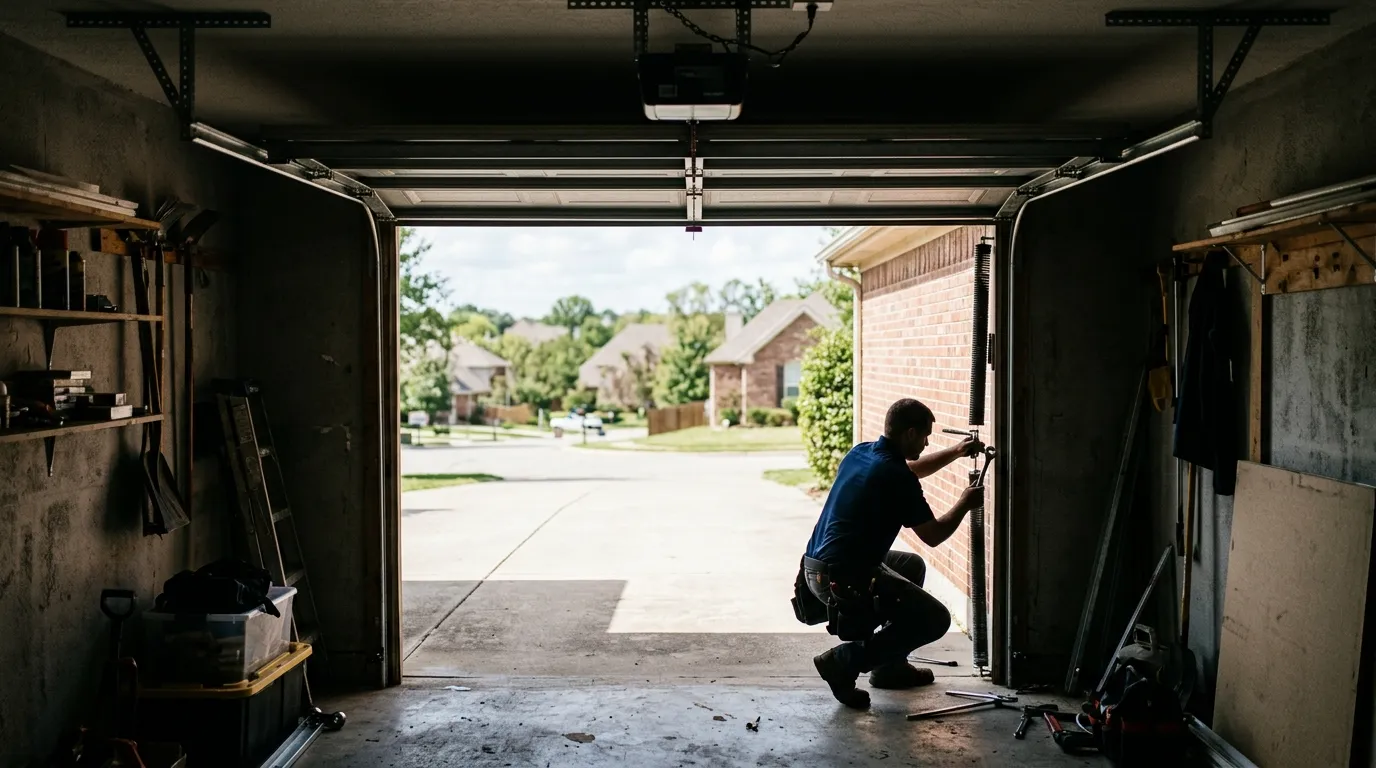
Garage Door Service
Tune-ups, lubrication, and safety checks that catch a small problem before it becomes a service call.
Learn more →Frequently Asked Questions
How do you figure out what's actually wrong before charging for a repair?
We open with the door itself - cycle it a few times, check spring tension, look at the track and rollers, and confirm the opener's load rating matches the door. Because most doors here date from the 1956-2014 build range, we're usually diagnosing an era of hardware, not a random part. That look is part of the call, not a separate charge before we know what we're fixing.
Is a noisy door always a spring problem?
No. Grinding usually points to rollers, a slap or snap sound usually points to cable or hinge hardware, and a groan on lift often points to the opener gear rather than the spring at all. We can't tell which one without hearing it in person, which is why we don't quote a fix over the phone.
Do I need a heavier door because of the coast weather?
Webster sits in a mild band with only occasional freezes, so cold isn't the driver here - humidity and daily heat cycling are. That affects fasteners, weatherstrip, and finish more than it affects whether you need a heavier gauge door. We'll tell you honestly if your current door is holding up fine rather than push an upgrade you don't need.
When does it make more sense to replace than repair?
When the door is from the earlier end of that 1956-2014 range and the track, spring, and opener are all original and all showing wear at once, repairing one part often just exposes the next. We'll walk you through what we're seeing rather than guess - sometimes one new spring genuinely solves it.
Have a Door That Needs a Second Opinion?
Call and describe what it is doing - we will tell you what it likely is.